Trending

Open a box from a local grower in midsummer and the first thing you notice may not be beauty. The peaches are small. The courgettes curve. Half the tomatoes would never survive a supermarket's quality check. Then you cut one open, and the question flips: why does the produce that looks least impressive often taste most like itself?
There is no single secret behind it. Smaller, uneven produce is the visible result of a string of ordinary decisions — which varieties get planted, how much water and nitrogen they receive, when they are picked, and who, exactly, they are being grown for. Once you know what those decisions are, a lumpy crate stops looking like a defect and starts looking like information.
A supermarket buyer is not shopping for one dinner. They are stocking hundreds of stores, and every link in that chain rewards predictability: fruit that fits a fixed punnet, cases that stack without gaps, produce that holds for a week on a shelf and another three days in a customer's fridge.
That is why commercial grading is so strict about size and shape. Uniformity is not decoration; it is logistics. If the calibres are consistent, packing lines run smoothly, labels are accurate, and shoppers know roughly what they are getting.
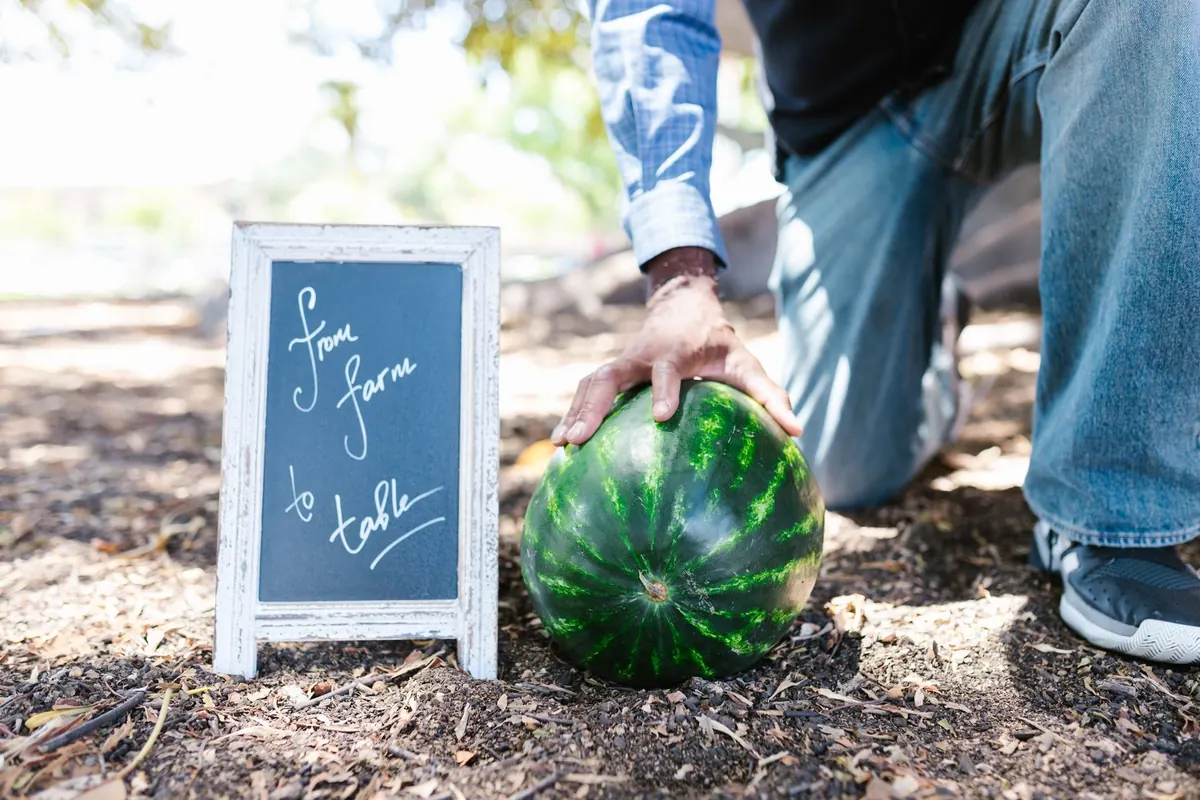
A local grower sells to a different customer: you, buying a bag for the next few days, not a pallet for the next fortnight. Their harvest goes from field to stall in hours, so it does not need armour. Once the requirement to survive a long journey disappears, so does most of the reason to grow for size and sameness.
Commercial breeding programmes have spent decades prioritising firmness, uniform ripening, disease resistance and yield. Those are sensible goals for a fruit that must travel. They are much less relevant for a grower with a stall ten kilometres from the field.
So local growers tend to plant differently. They choose open-pollinated and older varieties for flavor, texture and how well a crop performs in their particular soil, even when that means thin skins, soft flesh and fruit that ripens unevenly across the row.
Uniformity costs something. A tomato bred to ripen all at once and hold its shape can be sliced thin and shipped far, but it rarely has the dense, sweet-sour flesh of a variety selected for eating over keeping. The same goes for apples that stay crisp for months and pears that soften into something worth waiting for. When a grower chooses flavor first, irregular size is often the price of admission — and a fair one.
A lot of final size is decided by management, not genetics. Plants given generous water and plenty of nitrogen swell. Fruit gets bigger and heavier, but that extra weight is largely water, and flavor is diluted along with it. Growers who limit irrigation, work with compost and living soil rather than soluble feeds, or dry-farm tougher crops often end up with smaller fruit that tastes more concentrated.
Thinning matters too. Removing some young fruitlets sends the plant's energy into fewer, larger fruits. A grower selling by weight has an incentive to thin hard. A grower selling by flavor and picking several times a week may thin lightly, keep more fruit on the tree, and accept a smaller average size.
Weather does the rest, and no one can negotiate with it. A cold spring, a dry August and an old tree in a small plot all leave their mark on the harvest. The things that commonly shrink and roughen local produce include:
Timing changes the picture as much as anything. Produce destined for a long supply chain is often picked before full ripeness, because firmness is what makes transport possible. For most fruit, sugar does not increase meaningfully after picking; it softens, colours and aromas develop, but the sweetness you taste was decided on the plant.
Local growers pick at ripeness, which is exactly when fruit is most fragile and least able to wait. That is the trade: a shorter shelf life in exchange for flavor that peaked in the field rather than in a warehouse.
Small and uneven is not automatically better, and it is worth saying so plainly. A tiny, dry peach is still a disappointment. But there are reliable tendencies you can cook with.
Small tomatoes, for instance, carry a high proportion of skin and seed jelly to flesh, which is where much of the flavor sits — halve them and roast them and the difference shows. Small courgettes tend to be firmer and less watery, so they hold their shape in a pan. Smaller aubergines have fewer seeds and less spongy interior. Dense, heavy-for-its-size fruit is usually the juicy one; a peach that feels light in the hand is often mealy inside.
Expect variety, not consistency. Expect a crate of courgettes in which no two are identical, and a punnet of tomatoes that ranges from marble to golf ball. Expect to pay for flavor and freshness rather than for appearance, and expect the occasional disappointment when weather wins.
The practical approach is simple: buy a small amount first, taste it, and let that grower become your benchmark. Judge the next purchase by how the last one tasted on a Tuesday, not by how it looked on the stall. Once you shop that way, small and slightly odd stops being a compromise and becomes a decent clue that you are buying food grown for eating.
Photo: RDNE Stock project / Pexels