Trending

Leafy greens are the most perishable thing in your basket and the easiest to get wrong. A bunch of spinach can look immaculate under market lights and still be two days from a slimy drawer. The good news is that most problems announce themselves before you pay — you just need to know where to look and in what order. What follows is the sequence worth following at the stall: stem first, then color, then a quick squeeze. It takes about thirty seconds and saves a week of quiet disappointment.
The stem tells you more than the leaves do. It is the part nobody photographs and the part that ages first.
Pick up a bunch of spinach or chard and look at the base. A fresh cut is pale, firm and slightly moist, the way a just-cut stalk looks. If the ends have gone brown, dry and woody, or split into frayed fibres, the bunch has been sitting for a while. The same goes for the core of a lettuce head: it should be pale and tight, with no rust-coloured streaks running up into the ribs.
Then test the stem itself. Bend one. It should snap with a small, clean crack. If it folds like a length of rope, the whole bunch has lost its structure, and no amount of cold water at home will bring it back.
For living lettuce sold with roots attached, the roots should be white and clean. Brown, stringy or slippery roots mean the plant has been sitting in stale water, and that smell transfers to the leaves.
One more thing: turn the bunch over. Rubber bands and twist ties are excellent at hiding a soft, dark patch where two stems meet. If the seller has bundled it tightly, ask to see the middle. Nobody minds.
Good greens are evenly coloured. Not just on the face you are shown — the whole bunch. A common trick of a crowded display is to turn the best side outward, so take the bunch out, rotate it, and look at the back.
Yellowing almost always starts at the outer leaves, which is why the first thing you should check is the leaf you would normally discard. A single pale outer leaf is fine and often unavoidable. Yellow running into the middle of the bunch is not.
Know what pale means for the variety. Butterhead lettuce and some chicories are naturally light. Spinach, kale and rocket should be deep and saturated. Dull olive-green, grey-green, or a bronze fade on red varieties all point to age rather than type.
Watch for translucency, too. Pale, water-soaked patches that look almost see-through are bruised cells breaking down. They will turn dark and wet within a day.
Crispness is mostly about water, and water is mostly about weight. A bunch that feels heavier than its size suggests is holding its moisture. One that feels surprisingly light is already drying out, even if it still looks respectable.
Lift the bunch by the stem and let the leaves hang free. They should hold themselves out and away from your hand. Leaves that hang straight down like wet cloth have lost their turgor.
Now take a single outer leaf — the one that will show damage first anyway — and fold it gently between finger and thumb. Fresh leaves spring back and leave almost no crease. Tired leaves keep the fold, or feel papery and thin.
Listen as you move the bunch. Genuinely crisp greens make a faint crackle. A soft, quiet rustle is the sound of a bunch on its way out.
Finally, feel the temperature. Greens should be cool to the touch. If a bunch is warm, it has been out of the cold chain long enough to start losing quality, whatever the leaves look like right now.
Not all imperfections matter. A small hole from an insect, a slight tear at the leaf edge, a single browned tip — these are cosmetic and easily trimmed. But some signs are a hard no:
Also look at where the bunch was sitting. Greens pulled from the bottom of a crushed pile have been pressing on each other for hours; the leaves underneath will be bruised even if the top looks perfect.
Bagged greens are convenient and much harder to judge. Start with condensation: fine droplets are normal, water pooling in the corners is not. A bag with visible liquid has leaves sitting in it, and those leaves are on a short clock.
Press the bag gently. Fresh leaves separate and shift. If they have matted into a single wet mass, put it back.
Check the bottom of the bag, where the smallest, most delicate leaves settle and get crushed. A dark, compacted layer down there is the most reliable warning sign on the shelf. Then look across the plastic rather than through the printed panel — the label is designed to face you, the leaves behind it are not.
Baby greens bruise faster than mature ones, so buy them in the quantity you will actually finish. Loose greens remain the better choice where you have the option, simply because you can inspect every leaf. A short note on food safety: if you are pregnant, immunocompromised, or cooking for someone who is, check current guidance on washing and pre-washed greens with a health professional rather than relying on the label alone.
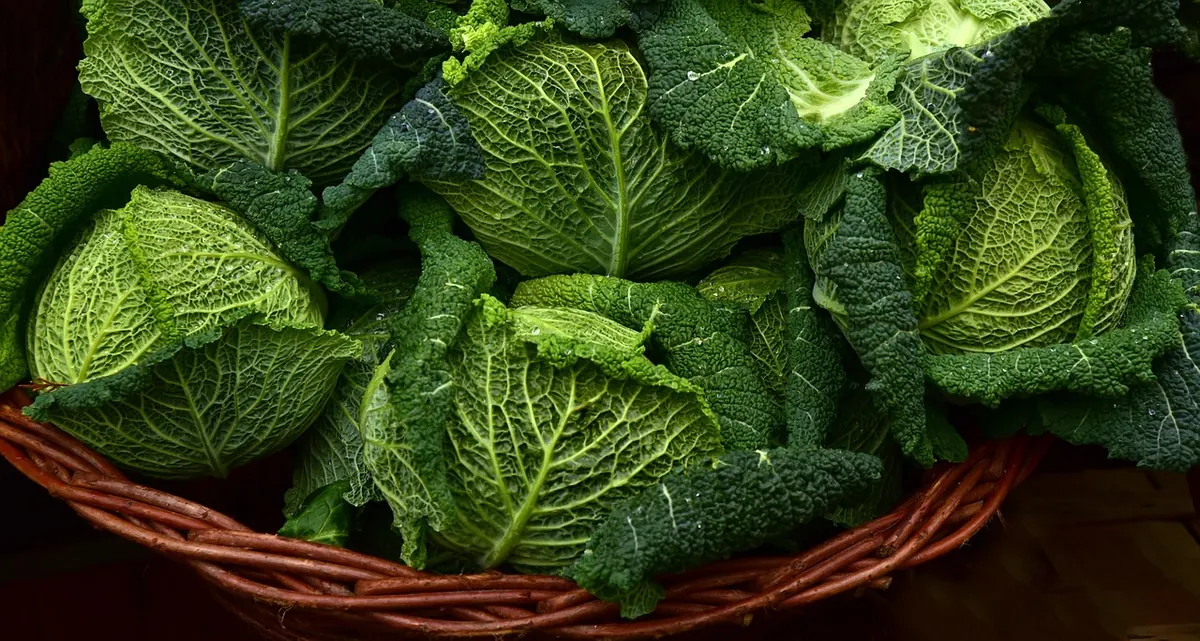
The best greens in the shop are still a bad purchase if they will not survive until you cook them. Tender leaves — spinach, rocket, butterhead, baby mixes — are realistically a three-to-four-day purchase. Kale, collards, cabbage and radicchio hold much longer and forgive a busy week.
Buy the freshest thing you find, not the biggest bag on offer. Two small, crisp bunches will serve you better than one large, tired one, and they take up less space in the drawer where greens actually keep best.
Run through this at the stall, in order, and you will rarely take home a disappointment:
One habit worth building: buy your greens last, not first. A bunch of spinach that spends forty minutes in a warm bag on the way home has already lost some of the crispness you just paid for.
And if something looks borderline, say so to the seller. A good stall will cut the band, turn the bunch around, or tell you honestly which crate came in this morning. That conversation is worth more than any label.
Photo: ulleo / Pixabay